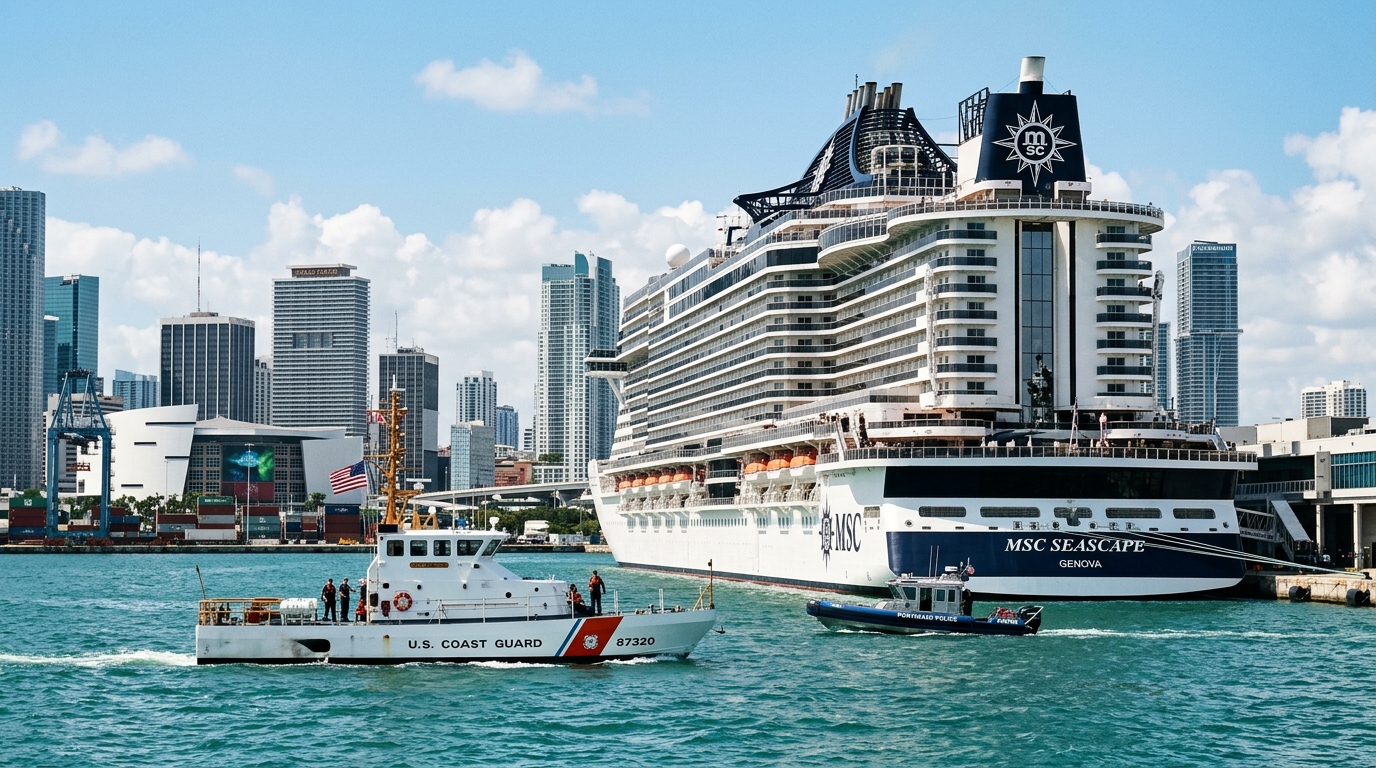
In an extraordinary regulatory enforcement action at one of the world's busiest cruise hubs, the United States Coast Guard Sector Miami formally issued a detention order against the MSC Cruises ship *MSC Poesia* at PortMiami. The intervention prevented the vessel from departing on its scheduled multi-night Caribbean itinerary and ultimately forced the cruise operator to cancel the entire sailing.
Thousands of ticketed guests had already boarded the vessel, unpacked their luggage, and prepared for embarkation when Coast Guard inspectors announced that the ship failed to meet mandatory international safety benchmarks under the International Convention for the Safety of Life at Sea (SOLAS).
Why Did the Coast Guard Issue a Detention Order?
According to official statements from Coast Guard maritime safety personnel, an expanded Port State Control (PSC) examination identified critical "deficiencies with vessel systems."
Under federal maritime authority (46 U.S.C. Chapter 33), the Coast Guard holds statutory power to detain foreign-flagged commercial vessels operating in U.S. waters whenever inspectors uncover conditions that present serious hazards to human life, ship seaworthiness, fire-suppression capabilities, or maritime environmental compliance.
What Are Stranded Passengers Legally Entitled To?
While modern cruise passenger ticket contracts are notoriously one-sided—routinely disclaiming liability for port cancellations and schedule deviations—a total failure to sail gives passengers clear legal remedies under both maritime contract law and the Federal Maritime Commission (FMC) passenger vessel regulations:
- Full 100% Cash Refund: When a cruise operator cancels a voyage due to regulatory detention or failure of seaworthiness, passengers are entitled to a complete 100% refund of the cruise fare, port taxes, government fees, and prepaid excursions, returned to the original payment method.
- Prohibition on Involuntary Future Cruise Credits (FCC): Operators cannot compel travelers to accept future cruise credits in lieu of lawful cash refunds when the cancellation is initiated by the carrier.
- Incidental Travel & Lodging Restitution: Non-refundable travel expenses incurred as a direct consequence of vessel grounding—such as emergency flights, hotel stays, and ground transfers—frequently form the basis of valid breach-of-contract claims under state consumer protection statutes.
Cruise Line Denying or Delaying Your Lawful Refund?
If an operator or travel insurer refuses to refund non-refundable travel expenses or delays your statutory payout past 30 days, draft an attorney-grade Certified Pre-Court Demand Letter citing Florida County Court jurisdiction (\$8,000 small claims limit) or your home state court rules.
Draft Pre-Litigation Refund Demand Letter →How to Enforce a Refund Claim Against a Cruise Line
- Document All Written Communications: Save the cruise cancellation notice, emails from the line, captain announcements, receipts for hotel nights in Miami, and airline re-booking cancellation fees.
- Deliver an Official 14-Day Demand Notice: Send a formal letter via USPS Certified Mail to the cruise line's North American corporate headquarters (most major lines, including MSC, maintain legal registered offices in South Florida). Specify an exact 14-day compliance window.
- File a Consumer Complaint with the FMC: File an administrative complaint through the Federal Maritime Commission's Office of Consumer Affairs and Dispute Resolution Services (CADRS).
- Pursue Small Claims Arbitration or Litigation: If ticket contract forum selection clauses point to the Southern District of Florida or Florida state courts, small claims court provides an inexpensive venue (\$8,000 limit) where corporate counsel routinely settles to avoid court trial costs.